Approach
How we work
There is one room, one therapist and one hour. What follows is what usually happens inside it, what we treat, and what physiotherapy can and cannot be expected to do.
The hour
How the sixty minutes are usually spent
- 01
History and examination
What the complaint does across a day, what makes it worse, what has already been tried. Then a physical examination: movement, strength, tissue response, and the tests relevant to the finding. At a first appointment this is often twenty-five minutes of the hour.
- 02
Treatment
Manual therapy, graded loading, or work on the movement that is failing — chosen from the examination, and reviewed within the same hour to see whether it changed anything.
- 03
What you do next
A short programme, written down before you leave, with the dose and the reason for it. We would rather send you home with three exercises you will do than eleven you will not.
These proportions are a starting point, not a script. On some days the examination takes most of the hour; on others you have come to be loaded and we get on with it.
What we treat
Four areas of work
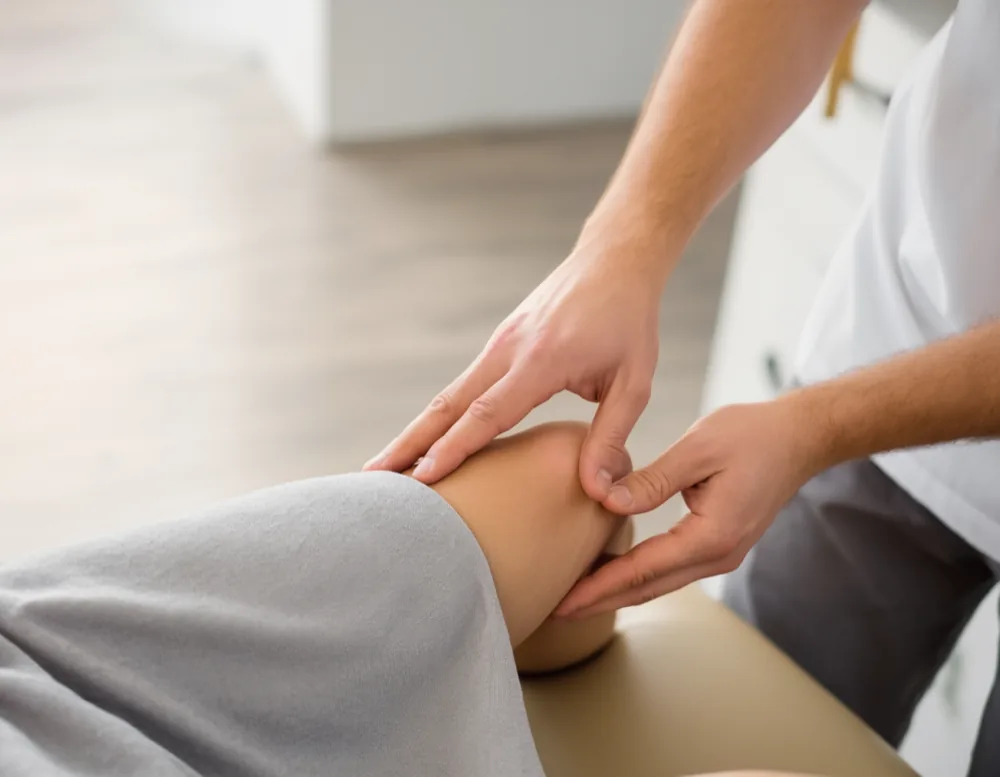
- Assessment and manual therapy
- A physical examination of joints, muscle and nerve tissue, together with a history of how the complaint behaves. Manual therapy — graded joint mobilisation and soft-tissue technique — is used where the examination suggests it will help, usually to make movement or loading possible. It is one tool among several and rarely the whole treatment.
- Loading and exercise therapy
- Most musculoskeletal complaints respond to the right amount of loading applied gradually over weeks. We build a programme small enough to be done, record the dose, and change it as the tissue tolerates more. Progress is measured against your last appointment rather than against an average.
- Rehabilitation after surgery
- We work to the protocol your surgeon has set and to the timelines the operated tissue needs. Where our finding and the surgical plan appear to disagree, we ask your surgeon before going further rather than choosing between them ourselves.
- Persistent pain
- Pain that has lasted more than three months usually behaves differently from acute pain and rarely responds to the same approach. We work with graded activity, with a clear account of how pain systems behave, and at a pace you can sustain. We do not promise that pain will stop. We work on what you are able to do.
Do you need a doctor's prescription?
Not in order to be treated: you may come to us as a self-payer without one. You will usually need one in order to be reimbursed — most private insurers and all Beihilfe offices ask for an ärztliche Verordnung before they pay anything. If reimbursement matters to you, get the prescription first and bring it to the first appointment.
Plainly
What we do not do
We do not diagnose medical conditions. Physiotherapists in Germany are not permitted to, and we do not pretend otherwise. We describe a physiotherapeutic finding and, where something does not belong to us, we say so and ask you to see a doctor.
We do not promise outcomes. Two people with the same finding do not recover at the same rate, and we will not put a number of sessions on your recovery at the first appointment.
We do not sell courses of treatment you do not need. If you are better, we say so and stop. Unused appointments in a ten-appointment package are refunded at the single-appointment rate.
We do not treat medical emergencies. Sudden severe pain, loss of strength or feeling, chest pain or a fall with a suspected fracture belong to a doctor or to 112, not to a physiotherapy appointment next Tuesday.
Video appointments
The hour, over an encrypted line
For reviewing a programme, progressing loading, or checking how a rehabilitation is going, an appointment can be held by encrypted video. It runs the full sixty minutes and is billed as a follow-up. It is not a substitute for a physical examination, so we hold the first appointment in the room, and we will ask you to come in whenever an examination is what the question needs.
Ask about a video appointment
Medical disclaimer
What this website is not
The information on this website is general and describes how we work. It is not a diagnosis, not a treatment recommendation for your particular case, and no substitute for examination by a doctor or a physiotherapist. Physiotherapists in Germany do not diagnose medical conditions. We make no promise about the outcome of treatment; what an hour can achieve depends on the finding, on the tissue and on the person.
In an emergency — sudden severe pain, loss of strength or sensation, chest pain, or after a serious fall — call 112 or the medical on-call service on 116 117. Do not wait for a physiotherapy appointment.